Eucatastrophe: The 'Everything's OK in the End' Feeling
The concept that makes the LOTRs hit home
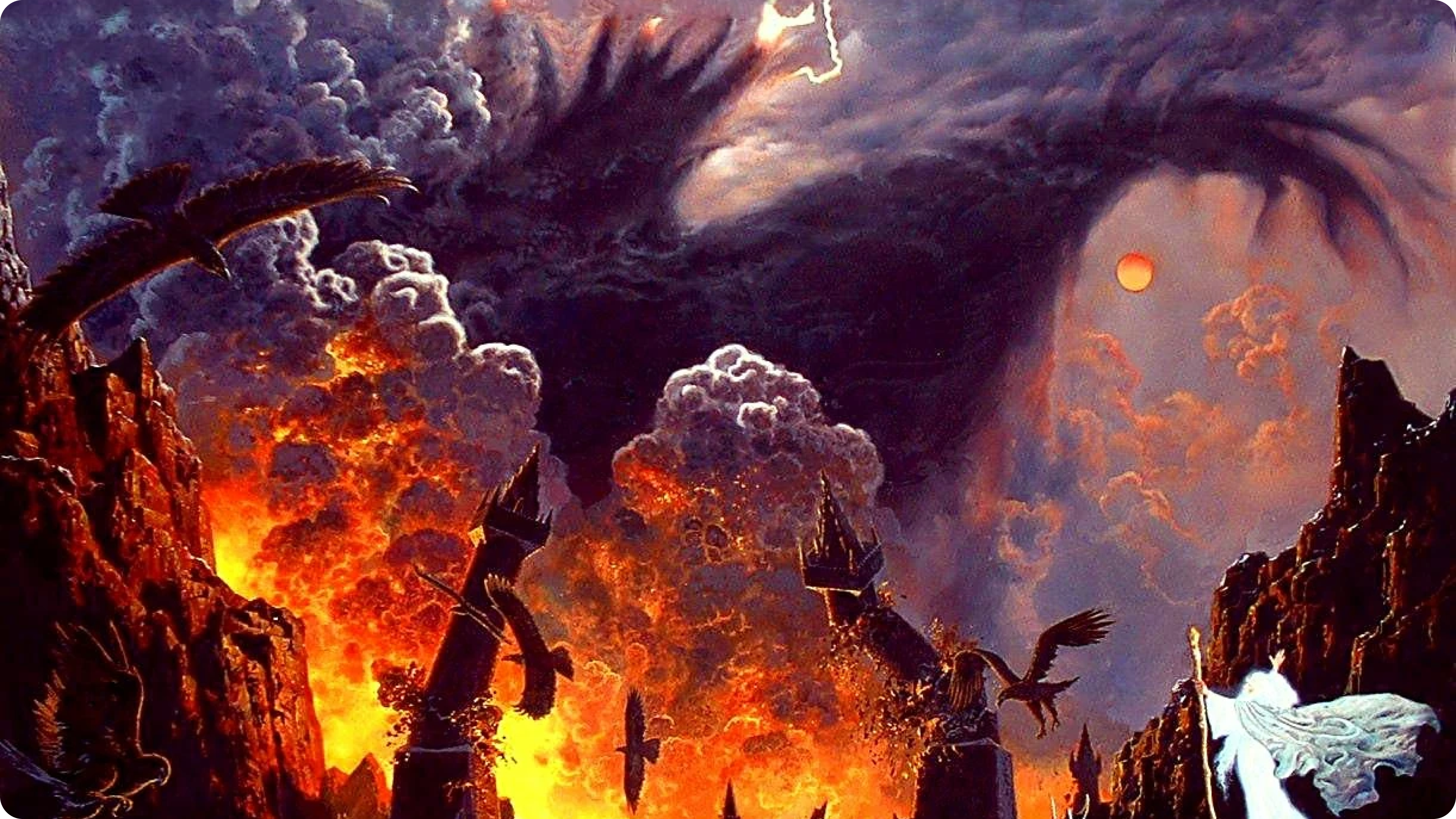
‘The consolation of fairy-stories, the joy of the happy ending: or more correctly of the good catastrophe … In its fairy-tale – or otherworld – setting, it is a sudden and miraculous grace: never to be counted on to recur. It does not deny the existence of dyscatastrophe, or sorrow and failure: the possibility of these is necessary to the joy of deliverance; it denies (in the face of much evidence, if you will) universal final defeat and in so far is evangelium, giving a fleeting glimpse of Joy, Joy beyond the walls of the world, poignant as grief’
– J.R.R. Tolkien, ‘On Fairy-Stories,’ para. 99
The etymology of ‘catastrophe’ is Greek.
‘cata’ or ‘kata’ = ‘down’
‘strophe’ or ‘strephein’ = ‘to turn’
In classical drama, catastrophe was the climax and resolution of the plot – not necessarily negative, like our modern use of the word implies. Dyscatastrophic is a bad ending; ‘dys’ = ‘bad.’ ‘Eu’ is Ancient Greek for ‘Good,' – making essentially Tolkien’s eucatastrophe to mean a ‘good ending.’
But it’s more than just a happy ending.
The way we use catastrophe implies a total and final reckoning.
The good total and final reckoning in the LOTRs is the orgasmic eruption of Mount Doom and the realisation that good – against all odds – has prevailed over evil, as we watch the dark tower of Barad Dur come hurtling to ground to only f*cking explode mid air.
I regret to use orgasmic in a sentence.
But it’s what it be.
The shock of prevailing good over evil is very much a Christian notion, not surprising seeing that Tolkien was an ardent catholic. But it’s more than just winning: it’s the realisation that there’s more to the world than misery and fear, and in that miraculous moment, the true nature of reality is revealed, and that truth is ultimately good.
All the world’s wrong will be set to right.
A feeling that resonates deeply in our mortal bones.
Its genius is that it gets to the core of good story telling. the mono-story is good looking like it will lose, then miraculously coming out on top. Virtually every major modern story follows this trope. But to be exciting, you have to be convinced that all is lost, otherwise, it’s predictable, and therefore boring.
The euphoric feeling of dread being washed away is the climax.
And it is very much the same in life.
The great spiritualist and lecturer, Alan Watts, argued this point: if there was a God, all knowing and powerful and eternal, they’d probably get bored. After uncounted years of following your hearts desire, you’d inevitably go: ‘right, time for something unexpected.’ It then stands to reason that you’d then create a material universe, beautiful beyond belief, yet unaware of its own nature.
Terrible and wonderful events take place, but they all turn back to source in the end.
Maybe eucatastrophic ecstasy is a minor realisation of this ultimate truth?
That’s it!
Let me know your thoughts.
Check out My Ultimate Reading List for book recommendations.
Jungian psychology is a powerful tool for life.
But getting started can be a:
Slow
Confusing
Frustrating process
After 5+ years of study, and reading 25+ major titles, I’ve put together a FREE resource to help people avoid overwhelm.
📚 Core ideas that can be applied right away
📩 Delivered in 5 easy and short lessons
🧠 Great foundation for further study

⭐️ Plus, you’ll get:
Digital assets and a tracker
A curated further reading list
Curious?
Get started today HERE (did I mention it’s FREE?).